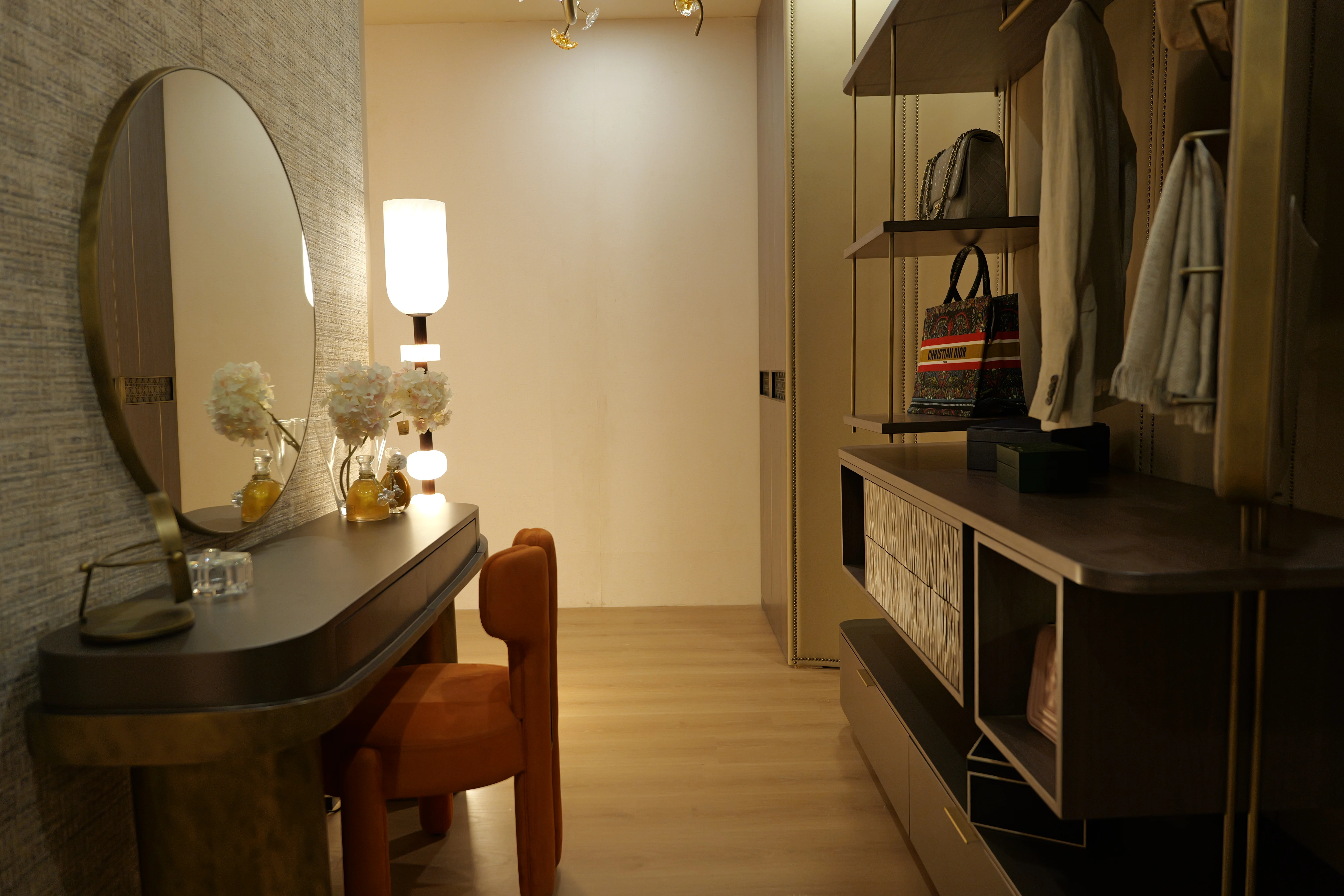
In design, it is easy to notice what is present, the textures, the colours, the furniture that holds attention. Yet true refinement often lies in what is not there. Negative space, the quiet intervals between objects, carries a profound influence. At Home ET TU, we see it not as emptiness but as presence – a silence that gives form its voice. This article explores the subtle power of negative space in shaping interiors.
Space that Breathes
A well-considered room is not crowded by what it holds, but lifted by what it allows. Negative space lets a design breathe, framing every line and surface with clarity. A bespoke wardrobe against a plain wall, a sculpted vanity within a calm expanse, a dining table surrounded by openness, these moments reveal how restraint amplifies beauty. In leaving room around an object, its proportions, textures and craftsmanship quietly emerge.
Calm as a Luxury
Beyond aesthetics, negative space changes how we feel. It creates stillness, drawing away the rush of excess. A living room becomes more welcoming when it does not overwhelm. A bedroom becomes more restful when space is left to unfold naturally. In silence, there is composure; in composure, there is luxury. To live with space is to live with ease, a quiet privilege in a world often saturated with noise.
Restraint as Confidence
Designing with negative space requires patience and assurance. It resists the impulse to fill every corner or layer endlessly. At Home ET TU, we see restraint not as absence, but as intention. True luxury does not demand attention; it holds it softly. By leaving space unspoken, each crafted detail speaks with greater depth.
Harmony of Presence and Absence
Our approach treats negative space as a collaborator. Every bespoke piece is designed to coexist with the room, not dominate it. The lacquered sheen of a cabinet, the grain of a wooden surface, the silhouette of a chair, each finds meaning in the stillness around it. Negative space shapes how light travels, how shadows fall, how movement flows. It is as much a part of design as any material or form.
The Quiet Elegance of Less
In the end, design is not only about what is added but also about what is left behind. Negative space is a discipline of balance, a reminder that silence holds its own beauty. When a home carries this sense of quiet, it does more than impress, it resonates. It tells of refinement, of patience, of an elegance that endures.